
-
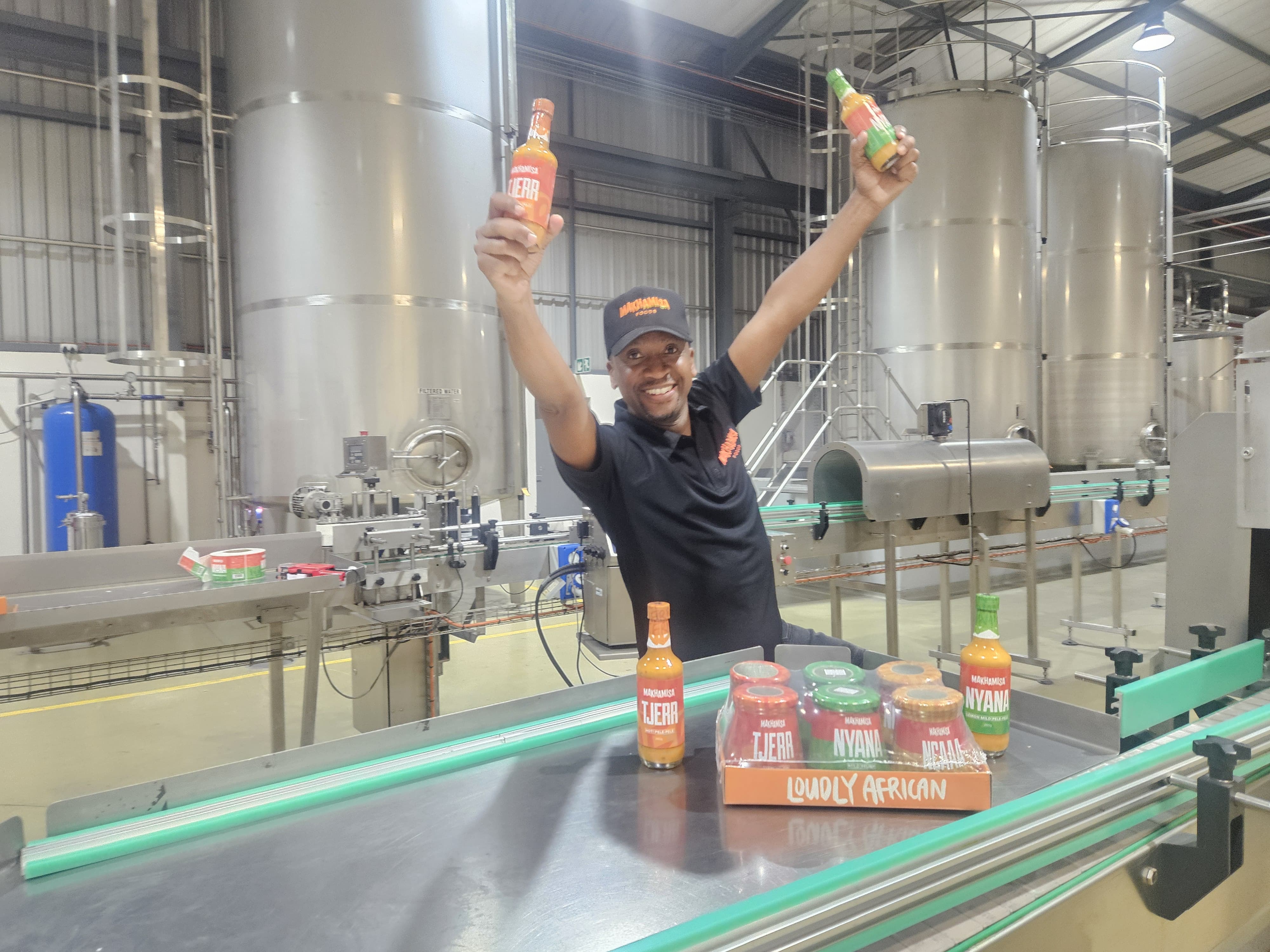 IDC’s refusal to issue commitment letter threats to collapse a relish and sauce company
-
 Anxious Easter moments as fuel price increase
-
 Top five ANC positions in Limpopo and Mpumalanga uncontested
-
 Service delivery failures in municipalities chase away investors - Ramaphosa
-
 Coalition governance gaining acceptance ahead of municipal elections – Ipsos study
-
 Food production’s unintended climate change contribution
-
 Inside a surgeon’s most defining moment of separating conjoined twins
-
 IDC roasted for being ‘anti-black’
-
 Call for investors and labour to be active in fighting corporate crime
-
 Premier Ramathuba set to lead Limpopo ANC as top five positions unlikely to be contested
Call for investors and labour to be active in fighting corporate crime
University of Cape Town doctorate student Dr Trevor Yingwane's thesis dissected corporate criminal activities in three multinationals
Source: Supplied
Sizwe sama Yende
Shareholders that are actively monitoring companies in which they have invested their money can play a big role in curbing corporate crime.
This is a finding by University of Cape Town’s (UCT) doctorate student, Dr Trevor Yingwane, in his research that unravels corporate crime in South Africa and Germany.
South Africa has had its fair share of corporate scandals recently that include sugar giant, Tongaat Hullets Limited (THL), being placed under business rescue after its senior executives inflated profits and assets, leading to over R11 billion in debt. If negotiations among the interested parties fail, THL could be liquidated depending on what the Durban High Court decides on April 16.
The biggest scandal in the country has to be University of Cape Town’s (UCT) doctorate student, Dr Trevor Yingwane,, which is one of the case studies in Yingwane’s research.
Yingwane’s thesis titled - Unravelling corporate crimes within listed companies: a multi-case study of selected South African and German Companies – focused on three corporate scandals involving multinational companies, namely, Steinhoff, Volkswagen and Wirecard.
It offers some insight into the influence of directors’ and shareholders’ relationship and how certain practices beget criminal acts.
Steinhoff was incorporated in the Netherlands, but headquartered in South Africa, and had footprints in the US, UK and Australasia. Its business operations focused on the furniture retail, logistics, and automobile – and had 11 000 stores and 21 factories, employing more than 130 000 employees in 32 countries.
INFLATED PROFITS
Steinhoff’s wheels came off in 2017 when it was discovered that late CEO Markus Jooste overinflated profits and assets over many years.
Yingwane said that it is not only shareholders that should engage in activism but also labour unions especially in systems that provide for employee representation at board level.
“Shareholder activists do have sufficient power, particularly when they act collectively. But, sustainable change requires what I call decisive shareholder activism – a long-term, strategic and informed approach grounded in deep organisational understanding,” Yingwane said.
He distinguished between short-term, transactional activism focused on rapid value extraction and long-term engagement aimed at stabilising organisations and strengthening governance.
Yingwane argued that long-term activism was more effective in preventing criminogenic practices.
ANNUAL REPORT SYNDROME
Across the three cases Yingwane researched, he identified consistent patterns that led to criminal activities such as weak board oversight, excessive trust in managerial performance, compromised independence among non-executive directors and close associations between executives and key stakeholders such as auditors and consultants.
He found that manipulation of annual reports, which he described as “annual report syndrome” to project exceptional performance and sustain investor confidence transcended across the three companies and it was of the reasons they found themselves in the doldrums.
This desire to impress markets overrode ethical and legal obligations, Yingwane said.
“In each case, the fixation on share price growth created incentives for managers to produce impressive numbers at any cost. When strong financial performance becomes the primary measure of success, it can create blind spots that are easily exploited.”
Yingwane found that governance failures were rarely the result of a single breakdown of a company. “They arise from the interaction between micro drivers such as toxic managerial cultures and macro drivers like weak oversight and unhealthy stakeholder relationships,” he noted.
Yingwane said that incidences of corporate crime had escalated markedly across many countries in the world. These crimes encompassed financial fraud, market and currency manipulation, corruption, misrepresentation, and environmental degradation.
Evidence indicate that corporate crimes affect not only companies but also the country’s gross domestic product (GDP). In the United States, corporate crime costs companies over 3% (US$380 billion) of their total annual revenue, and over US$1trillion of GDP. Similarly, in Germany, it exceeds US$2.5 billion of the annual GDP.
South Africa’s statistics remained unclear, as the reporting primarily focused on common and organised crime, Yingwane said.
UNRELENTING PURSUIT FOR PROFIT
“Crucially,” Yingwane said, “the majority of these scandals appear to be driven by an unrelenting pursuit of profit maximisation.”
The Volkswagen corporate scandal involved the selling of diesel vehicles equipped with deceptive devices to manipulate carbon emission tests in the European and US markets. These tests are aimed to minimise climate change as much as possible.
At Wirecard - a now-defunct German financial technology
Company that offered electronic payment processing and payment solutions - executive managers artificially inflated financial statements to conceal losses, which led to the company’s collapse.
“These scandals involved complex processes to conceal the corporate crimes and were facilitated by toxic corporate cultures. Significantly, multinational consulting firms, including Deloitte and Ernst and Young
(EY), were implicated in several of these financial improprieties, particularly in the cases of Steinhoff and Wirecard,” Yingwane said.
“Similarly, these corporations were driven by unsustainable excessive growth and the relentless pursuit of profit maximisation of profits.”
STEINHOFF CONVICTIONS
Six Steinhoff executives have been convicted for fraud so far.
Audit executive, Hein Odendaal, was given a four-year jail term or a R2 million fine in the Pretoria’s Specialised Commercial Crimes Court last week.
Steinhoff’s former finance director,Ben la Grange, was sentenced to five years in jail in October 2024. Former auditor, Iwan Schelbert, was also sentenced to five years in jail in January. Steinhoff’s former doctor, Gerhardus Burger, was given a suspended sentence for insider trading in 2024.
Jooste allegedly shot himself on March 21, 2024, at his home in Hermanus after he was fined R423 million by the Financial Sector Conduct Authority (FSCA) for fraud.