
-
 Food production’s unintended climate change contribution
-
 Inside a surgeon’s most defining moment of separating conjoined twins
-
 IDC roasted for being ‘anti-black’
-
 Call for investors and labour to be active in fighting corporate crime
-
 Premier Ramathuba set to lead Limpopo ANC as top five positions unlikely to be contested
-
 Teflon former SAMSA executive caught in a recruitment scandal
-
 Fetakgomo Tubatse mayor takes rival to the cleaners for defamation
-
 Premier Ndlovu wants to see Mpumalanga youth benefiting in the lucrative real estate business
-
 Limpopo takes steps to process minerals locally, create more jobs in mining industry
-
 Mpumalanga’s plan for economic growth and jobs
Food production’s unintended climate change contribution
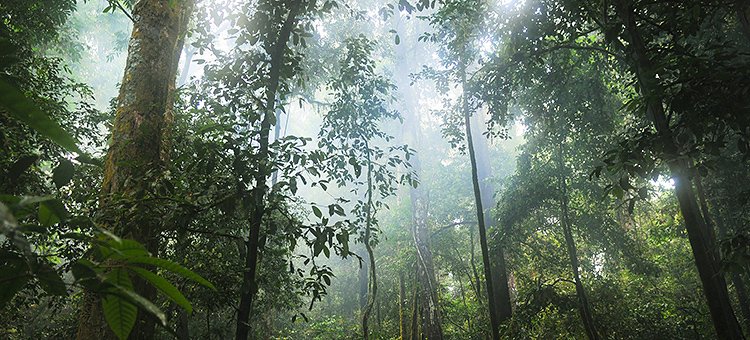
Agriculture is contributing to deforestation and by extension to climate change. A study by Chalmers University of Technology in Sweden indicates which countries and commodities contribute to the chopping down of trees.
Source: Supplied
Sizwe sama Yende
Agriculture, including the production staple crops and beef, are driving deforestation in many countries.
This will, in the long run, worsen global warming that will affect the production of the same agricultural products.
A global survey by Chalmers University of Technology in Sweden, on 179 countries and 184 commodities, has shed light about crops that were responsible for deforestation in various parts of the world.
Forests act as natural carbon sinks that absorb billions of tons of carbon dioxide through photosynthesis, and store carbon in biomass and soils. They are critical in mitigating climate change by reducing greenhouse gases such as carbon dioxide, methane and nitrous oxide from the atmosphere.
This is the reason the world’s focus has been on protecting the Amazon Forest in South America – a global regulator of climate change, which scientists have warned was reaching a tipping point due to deforestation.
The study found that maize, rice and cassava drove more deforestation than major export-oriented crops like cocoa, coffee, and rubber. It also confirmed that the major impact of meat production.
However, it also revealed several overlooked drivers of deforestation.
Lead author of the study, Chandrakant Singh, and his colleague, Martin Persson, have developed the Deforestation Driver and Carbon Emissions model that links agricultural products with data on deforestation globally.
“Deforestation’s links to food production have long been studied, but have often focused on some products, such as beef, soybeans and palm oil, which are well known in the context of deforestation; and some countries in the world, such as Brazil or Indonesia,” said Singh.
“In our study, we’ve combined extensive satellite data on land use with agriculture statistics in a way that gives us the most comprehensive and accurate picture yet of what is driving deforestation worldwide,” he added.
Countries that contributed the most to deforestation, the study found, included Brazil (32 per cent), Indonesia (9 per cent), China (6 per cent), Democratic Republic of Congo (6 per cent), USA (5 per cent) and Ivory Coast (3 per cent)
The model shows that a total of 122 million hectares of forest have disappeared due to agriculture-driven deforestation during the period 2001–2022, of which more than 80 per cent has been lost in the tropics.
The study confirms that clearing forests to create pasture for meat production, as well as producing major export commodities such as soybeans and palm oil, drove deforestation
Staples a strong driver of deforestation
Locally produced and consumed staple crops had a greater impact on deforestation than many major export commodities.
Staple crops such as maize, rice and cassava were responsible for about 11 percent of all agriculture-driven deforestation, while the figure for cocoa, coffee and rubber combined was less than 5 per cent.
Unlike many other commodities, such as palm oil in South-East Asia and soybeans in South America, deforestation linked to staple crops is not concentrated to specific regions, but is distributed across large parts of the globe.
“The debate on deforestation has circulated a lot around how people in rich countries like ours cause deforestation with our commodities imports, and this is absolutely important to get to grips with. But we mustn’t forget that a large proportion of deforestation is driven by agricultural production for domestic markets. So to really reduce deforestation, we must also take action in the producer countries,” Persson said.
The researchers said that their model would be expanded to include non-food commodities in the future.
“We see a need to broaden the analysis beyond food and agriculture. One example is the mining and energy sector, which is a major driver of both direct and indirect deforestation. By broadening the analysis, we can get a more complete picture of which economic activities are putting pressure on forests around the world,” Singh said..
According to the study, commodities that drove global deforestation included beef (40 per cent), palm oil (9 per cent) soy beans (5 per cent), maize (4 per cent), rice (4 per cent), cassava (3 per cent), cocoa (2 per cent), coffee (1per cent) and rubber (1 per cent).