
-
 Teflon former SAMSA executive caught in a recruitment scandal
-
 Fetakgomo Tubatse mayor takes rival to the cleaners for defamation
-
 Premier Ndlovu wants to see Mpumalanga youth benefiting in the lucrative real estate business
-
 Limpopo takes steps to process minerals locally, create more jobs in mining industry
-
 Mpumalanga’s plan for economic growth and jobs
-
 A whole R103m spent on a foundation for Bushbuckridge municipality’s offices
-
Rice project to inject R40.3 billion annually into Mpumalanga economy and create 388 000 jobs – Premier
-
 Hawks’ blitz vindicates whistleblower fired for exposing Mpumalanga school repairs corruption
-
 Fronting is economic sabotage – Mashatile
-
 Minister Tau must drill some sense as he intervenes in THL stalemate
UMP’s ambition to position SA as a leading rice exporter
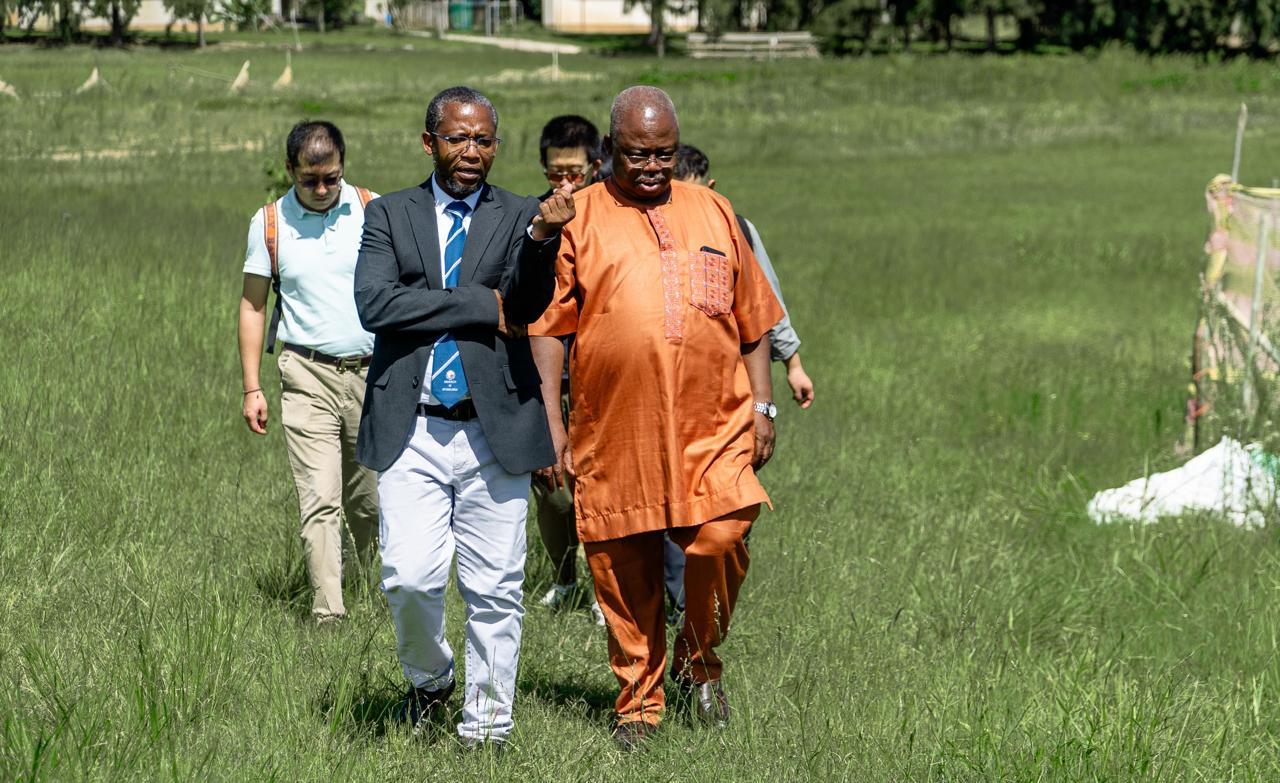
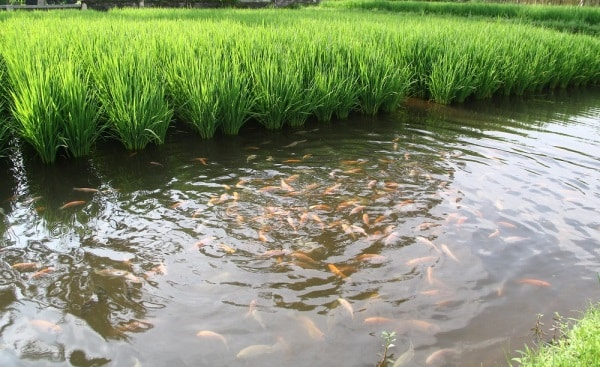
A delegation from University of Mpumalanga recently visited the Republic of China to strike a deal with world-renowned hybrid rice innovator, Professor Zhang Zhaodong.
Source: Supplied
UMP’s ambition to position SA as a leading rice exporter
The University of Mpumalanga (UMP) has teamed up with a world-renowned Chinese hybrid rice innovator in its ambitious venture in positioning South Africa as a net exporter of rice.
Hybrid rice is produced by the cross-pollination of two varieties for high-yield seeds. Some of the hybrids are also resistant to pests and disease.
Rice is grown at a very small scale in the country in KwaZulu-Natal, Free State and Limpopo due to the country’s arid nature. Although the country exports rice to neighbours such as Botswana, Lesotho, Namibia, Zimbabwe and Zambia it still relies on imports from countries such as Thailand, India, Pakistan and Vietnam to feed its population.
In this initiative, UMP is making history as the first university in South Africa and the whole of Africa to collaborate with Professor Zhang Zhaodong. Zhaodong heads the Hainan Quanyin Wuxing Seed Co., Ltd., a cutting-edge agricultural enterprise that drives innovation in rice production.
He is a global authority on hybrid rice from China’s leading institution. Zhaodong is a protégé of late academic, Yuan Longping, who is renowned as the "father of hybrid rice." Zhaodong is carrying forward Longping’s dream “to relax in the shade of tall rice plants and see hybrid rice spread across the world.”
Prof Zhang has dedicated 25 years to promoting tropical hybrid rice in the Philippines and has made the Philippines a success story. Hybrid rice planting in the country is expected to exceed two million hectares in 2026, yielding seven to eight tonnes per hectare.
UMP vice chancellor, Professor Thenjiwe Meyiwa, said in a statement that this landmark partnership aimed to revolutionise rice farming in South Africa, boost food security, create jobs, and positioning the country as a net exporter of rice.
"UMP is honoured to lead this pilot, addressing South Africa’s food security challenges while fostering economic growth," Meyiwa said.
UMP’s Faculty of Agriculture and Natural Sciences, the School of Agricultural Sciences and the Centre For Entrepreneurship & Rapid Incubator will work with Prof Zhang’s team to introduce high-yield hybrid rice varieties, substituting imports and tapping into global markets.
According to Harvest SA, it is estimated that South Africa imports 90% of its rice requirements. This situation, Harvest SA says, exposes consumers to high prices in the event of global supply shocks, exchange rate fluctuations and outright export bans from major rice-producing countries as witnessed in 2020 at the height of the Covid-19 pandemic.
Additionally, increases in global rice prices recently influenced by limited global rice supplies coupled with the weak rand could result in higher rice prices for the South African consumer.
The Observatory of Economic Complexity (OEC) noted that in 2024 South Africa exported rice valued at R640 million. Rice was the 269th most exported product (out of 1,214) in the country. Rice exports worth R266 million went to Botswana. Lesotho received stock worth R104 million, Namibia (R96.1 million), Zimbabwe (R81.2 million) and Zambia (R45.2 million).
In the same year, South Africa imported rice valued at R11.9 billion. Rice was the 19th most imported product out of 1 220. The main origins of South Africa’s rice were Thailand (R8.95bn), India (R2.34bn), Pakistan (R175m) and Vietnam (R147m).